
If you're standing in your kitchen staring at oak cabinets that feel too orange, too dark, too glossy, or just stuck in another decade, you're in the same spot as a lot of Central Florida homeowners. The boxes may still be solid. The layout may still work. But the finish looks tired, worn around the pulls, and impossible to clean back to “new.”
That's usually when the big question hits. Replace everything, reface it, or refinish what you already have?
For many homes, refinishing is the sweet spot. You keep the structure that's already there, skip the disruption of a full tear-out, and get a cleaner, more current look. The harder part is choosing the right topcoat. Homeowners hear terms like lacquer, conversion varnish, polyurethane, acrylic, and hybrid finishes, but they're not looking for a chemistry lesson. They want to know what will hold up in a busy kitchen, what will stay white in strong sun, and what won't start looking worn again after a short time.
That's where a polyurethane acrylic cabinet finish enters the conversation. It sounds technical, but its value is simple. It's a professional-grade finish built for cabinets that see humidity, hands, spills, cleaning, and everyday use.
Table of Contents
- Your Dated Cabinets Need an Update What Is the Best Finish
- Understanding Polyurethane Acrylic Finish The Best of Both Worlds
- Polyurethane Acrylic vs Other Common Cabinet Finishes
- The Pros and Cons of a Polyurethane Acrylic Finish
- Application Durability and Long-Term Care
- How to Hire a Cabinet Refinishing Professional
Your Dated Cabinets Need an Update What Is the Best Finish
A common Central Florida scenario goes like this. The cabinets themselves are in decent shape, but the finish has dated the whole room. Maybe the doors are an older stained wood with yellowed clear coat. Maybe a previous paint job chips at the corners and feels soft around the handles. Maybe the bathroom vanity still looks fine from across the room, but up close you can see swelling, wear, and dull spots.
Most homeowners don't want to rip out usable cabinetry just to fix the look. They want a result that feels current, smooth, and durable. They also want to avoid turning the house into a construction zone for weeks.
What homeowners usually want
The finish decision usually comes down to a few practical goals:
- A cleaner color update: White, off-white, greige, warm wood tones, or a deeper painted color that fits the rest of the house.
- A smoother surface: Not brushy, not sticky, not rough to the touch.
- Better durability: Something that holds up to humidity, cooking residue, cleaning, and constant opening and closing.
- A realistic process: Less disruption than replacing cabinets.
That's why finish choice matters so much. Two kitchens can look similar on day one and perform very differently a year later.
Cabinets fail in the details first. Around knobs, below the sink, beside the dishwasher, and on doors that catch direct sun.
Why this finish keeps coming up
A polyurethane acrylic cabinet finish gets attention because it aims at the exact problems homeowners care about most. It's used when the goal isn't just “make it look painted,” but “make it look refinished properly.”
For a Florida home, that matters. Sunlight can shift color. Humidity can expose weak prep and weak coatings fast. And kitchens don't give finishes much mercy. If you want cabinets that still look crisp after daily use, the topcoat has to do real work, not just add sheen.
Understanding Polyurethane Acrylic Finish The Best of Both Worlds
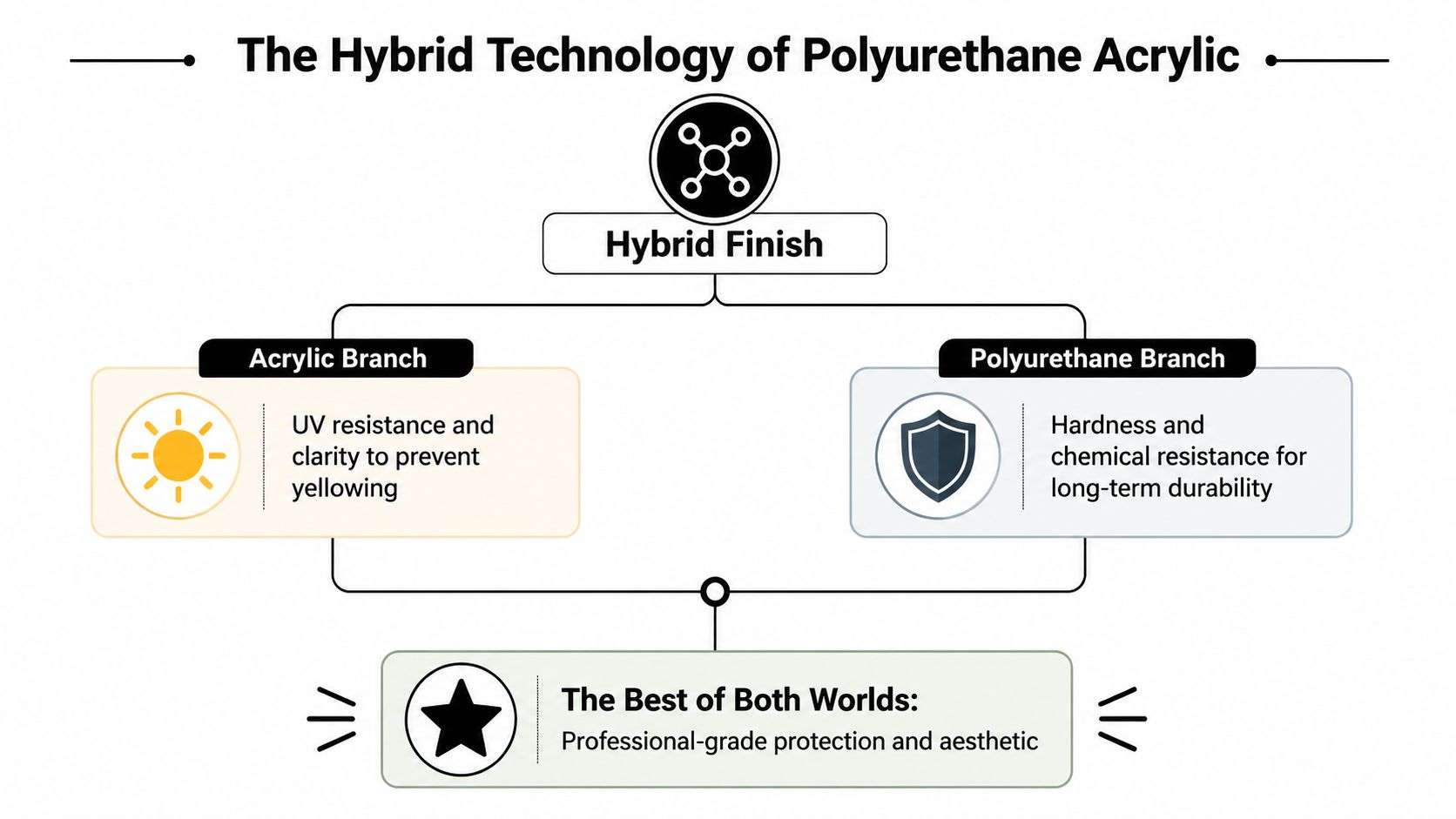
A polyurethane acrylic cabinet finish is best understood as a hybrid. One side brings toughness. The other brings clarity and color stability. Put together, you get a coating that's built to look refined and stay that way longer than simpler, off-the-shelf cabinet paints.
Think of it like this
Polyurethane is the work-boot part of the system. It's there for toughness, wear resistance, and a stronger protective film.
Acrylic is the clear-glass part. It helps the finish stay cleaner in appearance, especially on light colors, and helps reduce the yellowing problem that older finishes are known for.
When those two are part of a professional cabinet coating system, you're not dealing with basic wall paint in a prettier can. You're dealing with a finish designed for repeated contact, regular cleaning, and a smoother sprayed result.
What two-component really means
Many professional polyurethane and acrylic finish systems are two-component, sometimes called catalyzed systems. In plain terms, that means a base component is mixed with a hardener before application. Once mixed, the coating cures through a chemical reaction instead of drying by air exposure alone.
That difference matters on cabinets.
A finish that only air-dries can look good initially but stay softer than it should, especially on doors and drawer fronts that get touched all day. A catalyzed finish cures into a tougher film. It has more backbone, better resistance to routine wear, and a more professional feel.
Why homeowners notice the difference
The biggest differences show up in three areas:
Surface feel
A properly sprayed polyurethane acrylic finish feels tighter and more even. Doors don't have that rubbery or draggy feel that lower-grade coatings can develop.Appearance over time
White and light-painted cabinets are where this matters most. The finish is chosen partly because homeowners want a cleaner color that won't drift warmer than expected.Daily abuse tolerance
Kitchens are full of hand oils, water, food splatter, and repeated wiping. Bathrooms add steam and moisture. A stronger finish system is built for that environment.
Practical rule: If the goal is a factory-smooth cabinet look, the coating and the application method have to work together. One without the other usually shows.
Polyurethane Acrylic vs Other Common Cabinet Finishes
Not every cabinet finish belongs in the same conversation. Some are fine for trim. Some are workable for light-use built-ins. Some look great at first but aren't ideal for kitchens that get real use. A polyurethane acrylic cabinet finish sits in the professional category because it balances appearance and durability better than many common alternatives.
Cabinet Finish Comparison
| Finish Type | Durability | Yellowing Risk | Typical Cost | Best For |
|---|---|---|---|---|
| Polyurethane | High. Professional 2K systems are widely used for hard-wearing cabinet surfaces | Lower than older oil-style finishes, but depends on formulation | $8 to $24 per sq. ft. with matte to high-gloss options from 10 to 20 GU up to 80+ GU according to this finish comparison on PU and acrylic cabinet coatings | High-traffic kitchens, refinishing projects that need durability and sheen flexibility |
| Acrylic | Strong visual performance with very high gloss potential | Low. Often chosen when color clarity matters most | $10 to $33 per sq. ft. and can reach 80 to 95 GU gloss based on this cabinet coating comparison | Sleek modern looks, high-gloss projects, light colors |
| Oil-based polyurethane | Durable, but older-style look and behavior for many interiors | Higher yellowing risk in sun and on whites | Higher labor burden in occupied homes due to smell and cure behavior | Darker wood tones, traditional looks, not my first choice for light painted cabinets |
| Conversion varnish | Very durable in professional hands | Depends on system and use case | Premium professional option | Shop-style finishing where hardness and chemical resistance matter |
| Standard single-component waterborne finish | Better than basic wall paint, but still a lower tier than catalyzed systems | Usually better color stability than oil-style coatings | Lower upfront product cost | Lower-demand projects, not my preferred choice for busy family kitchens |
Where each option tends to win or lose
Oil-based polyurethane still has a reputation for toughness, but it's usually not the best fit for homeowners who want bright painted cabinets in Florida. In sunny rooms, yellowing is a real concern, and the smell and cure behavior are harder to live with in an occupied home.
Conversion varnish is a serious professional finish and can be an excellent option in the right hands. It's often chosen when a finisher wants a hard, durable surface with a shop-grade feel. The trade-off is that it's less forgiving in process and absolutely not a casual DIY product.
Single-component waterborne coatings are easier to work with, but they don't usually deliver the same long-term cabinet performance as a catalyzed hybrid system. For built-ins that don't get much abuse, they can be acceptable. For kitchen doors that get opened fifty times a day, they're a compromise.
The real decision for a Florida homeowner
The question usually isn't “What coating exists?” It's “What coating fits my house and how I use it?”
Choose based on your real priorities:
- If durability comes first: Lean toward a professional catalyzed finish.
- If bright whites or light neutrals matter: Favor a finish family known for better color stability.
- If you want ultra-high gloss: Acrylic-heavy systems stand out visually.
- If you want balanced durability and sheen flexibility: Polyurethane-based systems are often the safer practical choice.
If you're also deciding on decorative details, cabinet color and finish should work together with the style of the doors. A glaze, for example, changes the visual effect completely, which is why it helps to understand how cabinet glazing changes the final look before choosing the topcoat.
The Pros and Cons of a Polyurethane Acrylic Finish
The strongest reason to choose this finish is simple. It performs like a cabinet coating, not like a shortcut. That doesn't mean it's perfect for every project or every budget, but it does solve a lot of the complaints homeowners have with weaker products.
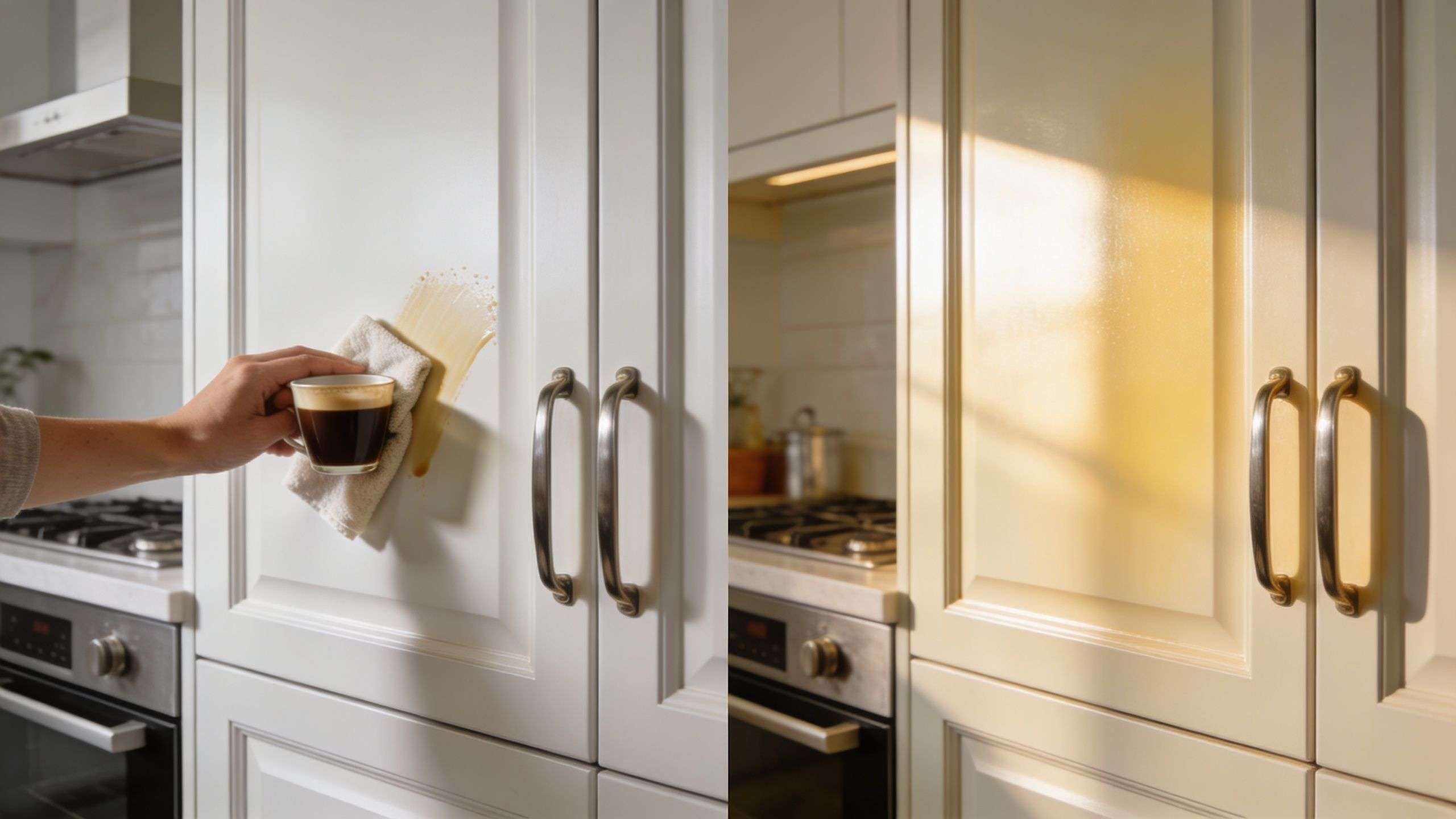
Pros that matter in daily use
A professionally applied 2K polyurethane acrylic system reaches 2H to 4H pencil hardness, while traditional lacquers are in the B to HB range and single-component urethanes are HB to 2H, which is why these systems are favored for high-traffic cabinet use as noted in the earlier comparison section.
That technical number translates into real life better than most homeowners realize.
- Better scratch resistance: Doors and drawer fronts deal with rings, fingernails, pet contact, bags, and constant use. A harder finish handles that traffic better.
- Better chemical resistance: Kitchens aren't gentle spaces. Grease, food splatter, hand oils, and normal cleaning all test the finish.
- Better moisture tolerance: In bathrooms and kitchens, moisture finds weak spots fast. A stronger topcoat gives you more protection where steam and humidity are part of daily life.
- Better clarity on light colors: If you want white or soft painted cabinets, a finish that resists warming or ambering is a major advantage.
Cons homeowners should know upfront
This finish also comes with trade-offs, and it's better to say that clearly.
- It usually costs more than a simple paint approach. The materials are higher grade, the prep matters more, and the application process is more demanding.
- It isn't a casual DIY coating. Mixing, timing, spray setup, and environmental control all affect the result.
- Spot repairs can be trickier. A cabinet door with real damage may need professional blending or recoating to disappear cleanly.
- You still need proper prep. No premium topcoat can rescue grease contamination, weak sanding, or loose failing layers underneath.
A premium topcoat doesn't cover bad prep. It locks bad prep in place.
When it makes the most sense
This type of finish makes the most sense when you care about the final feel as much as the final color. If you run a busy household, have a sunny kitchen, or want a refinish that feels more like factory cabinetry than house paint, the added cost and process are usually justified.
If the goal is the cheapest possible change, this probably isn't the route. If the goal is long-term usability with a more refined result, it's often worth it.
Application Durability and Long-Term Care
Most of the quality difference in cabinet refinishing shows up before the topcoat ever lands. The coating matters, but so does how it's sprayed, how the surface is cleaned, how the old finish is handled, and whether the doors are finished in conditions that support a smooth result.
Why application method matters
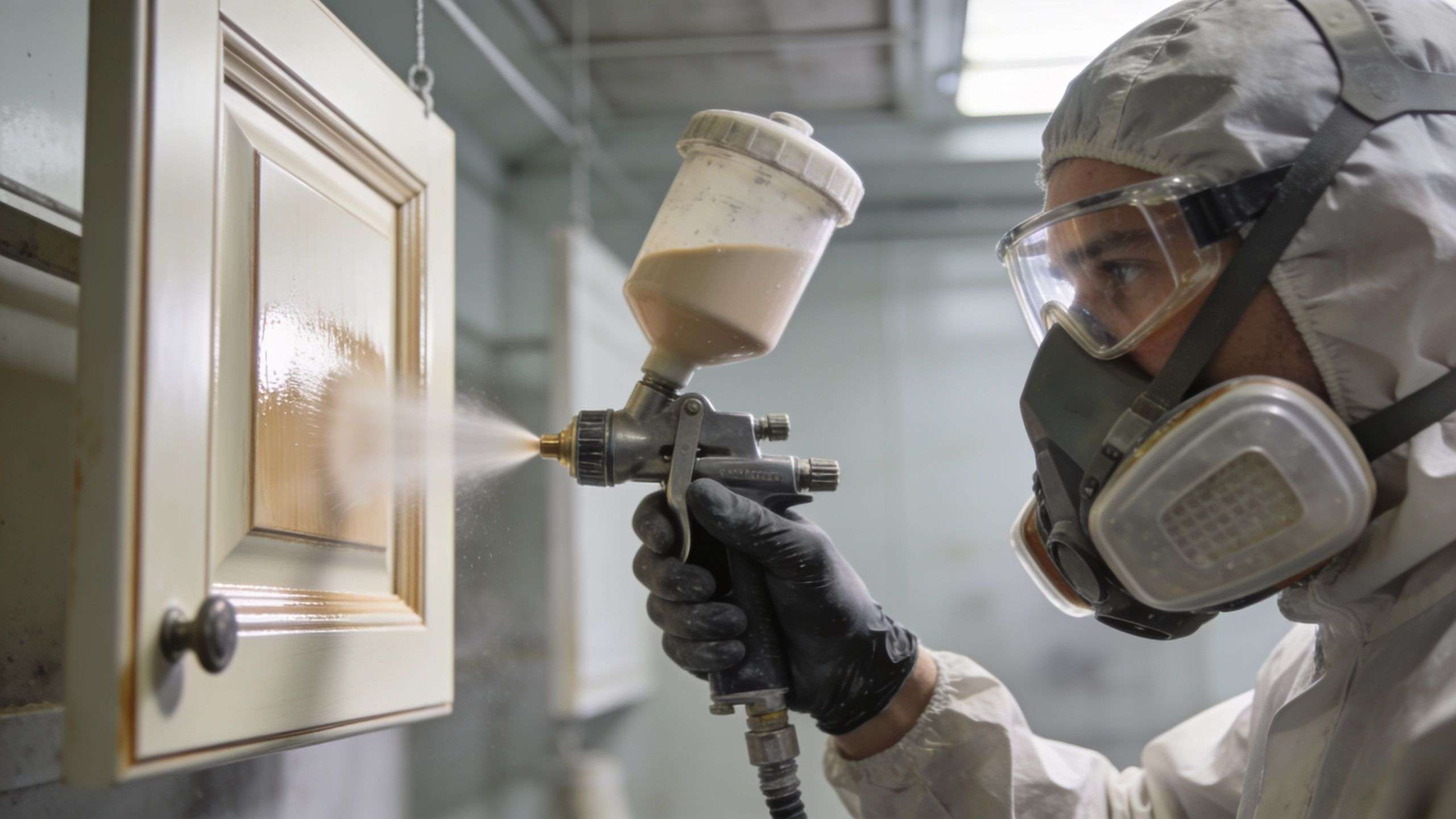
For cabinets, brushing and rolling usually leave behind what homeowners are trying to escape. Texture, lap marks, heavy edges, and an obvious “painted on site” look.
Professional refinishers typically spray cabinet coatings because that's how you get a more even film build and a smoother final appearance. It's also how you avoid piling too much material into profiles and corners.
Some refinishing companies, including Resurrect Wood Refinishing, use polyurethane acrylic systems as part of a professional cabinet refinishing process when the project calls for a durable sprayed finish.
How to live with it and keep it looking sharp
For Florida homes, sunlight matters just as much as kitchen wear. Acrylic polyurethane hybrid coatings showed less than a 5% color shift and retained over 85% of their gloss after 2000 hours in ASTM G154 accelerated weathering tests, according to this technical discussion of acrylic polyurethane coating performance. That's one reason these systems are attractive for bright rooms and light cabinet colors.
Humidity matters too, but the homeowner's role in maintenance is simple.
- Use mild soap and water: You don't need aggressive cleaners for normal upkeep.
- Wipe spills instead of letting them sit: Especially around sink bases, trash pull-outs, and lower doors.
- Don't use abrasive pads: They dull finishes and create avoidable wear.
- Treat worn spots early: Small issues are easier to correct before they spread, and this guide on fixing worn cabinet spots helps explain what's repairable.
In Florida, the best cabinet finish isn't just about scratches. It's about how it handles light, moisture, and cleaning month after month.
How to Hire a Cabinet Refinishing Professional
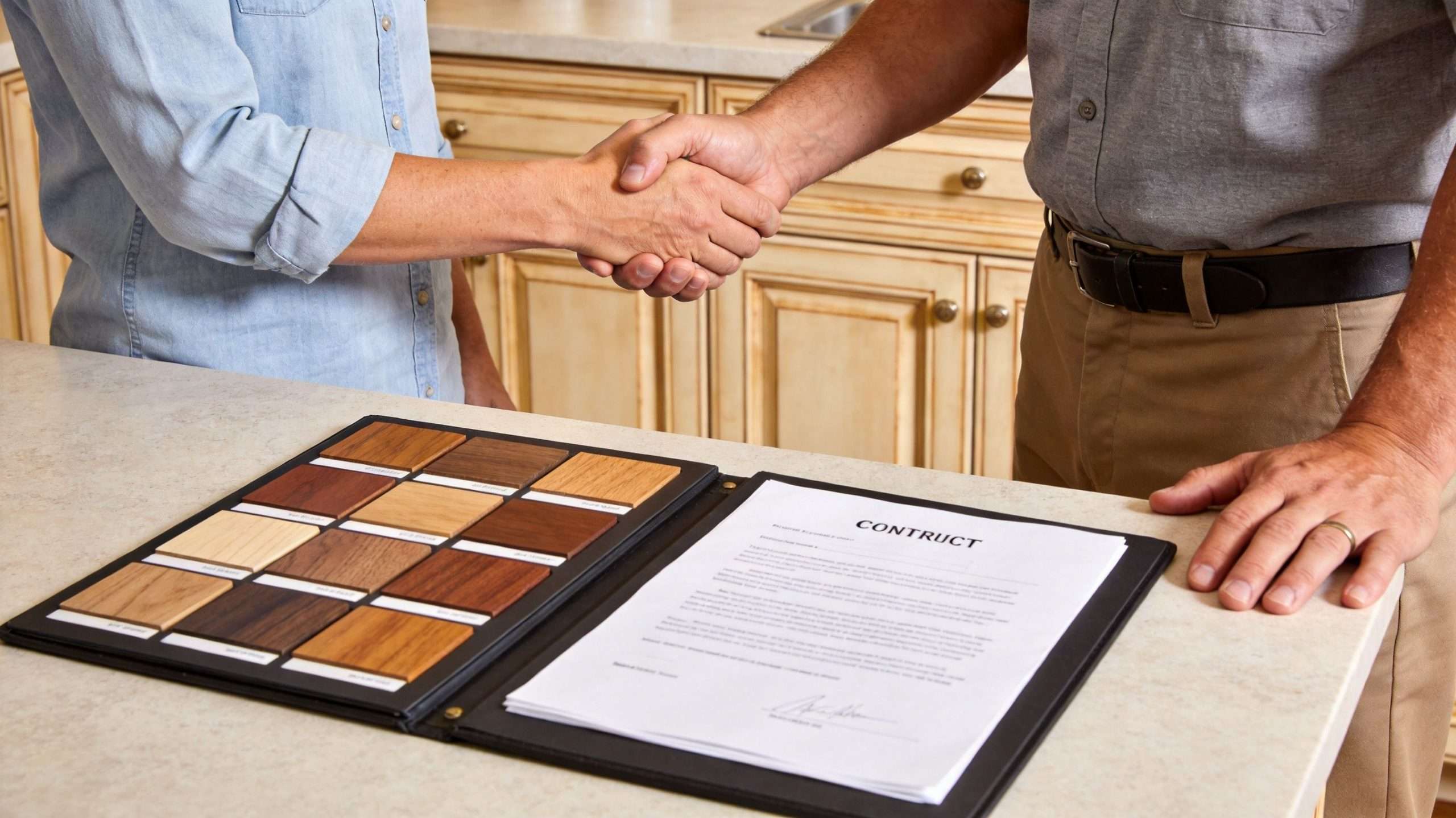
A good finish can still fail in the wrong hands. That's why hiring matters as much as product choice. Homeowners often focus on color and price first, but the longer-lasting result usually comes from the contractor who talks clearly about prep, process, and what they won't cut corners on.
Questions worth asking before you sign
Ask direct questions. A qualified refinisher should be comfortable answering them without getting vague.
- What does your prep process include? You want to hear about cleaning, surface prep, sanding strategy, masking, and how they deal with existing failing finishes.
- What coating system do you use on cabinets? Ask whether it's a professional cabinet coating, whether it's catalyzed, and why they chose it for your project.
- How do you apply it? Spray application matters if you want a factory-smooth result.
- How do you handle dust and ventilation? Cabinet work happens in a lived-in home. Clean containment matters.
- What does the quote include? Look for an itemized scope, not a vague lump sum.
- How are damaged doors or drawer fronts handled? Good contractors have a plan for repairs, replacements, or realistic limitations.
Warning signs to take seriously
Some answers should make you pause.
“We use the same paint we use on trim and walls” is not what you want to hear for a cabinet project.
Watch for these red flags:
- No clear prep explanation
- No mention of spray finishing
- No product transparency
- Promises that sound too easy
- A quote that skips details like door removal, hardware handling, or cure expectations
If you're comparing companies, it helps to know how to find a kitchen cabinet painter who actually specializes in this work rather than treating cabinets like another interior paint job.
The right professional should make the process feel clear. Not rushed, not mysterious, and not built around shortcuts.
If you're weighing whether a polyurethane acrylic cabinet finish is right for your kitchen or bathroom, Resurrect Wood Refinishing can help you evaluate the practical fit for your cabinets, your color goals, and the conditions in your Central Florida home. A good quote should tell you what finish is being used, how the prep is handled, and what result you can realistically expect before any work begins.
