
You may be standing in your Dr. Phillips kitchen right now thinking the same thing a lot of homeowners think. The house still works. The neighborhood still fits. The square footage is good. But the kitchen feels stuck in another decade. Dark wood, heavy stain, worn doors, dated color, and a finish that makes the room feel older than the rest of the home.
That's usually where the tension starts. You want a brighter, cleaner, more current kitchen. You also don't want to blow up the room, lose the space for weeks, and spend full-remodel money when the cabinet boxes may still be perfectly usable.
In many cases, a full gut job isn't the smartest answer. The better question is simpler: what needs to change, and what can stay? For many Dr. Phillips homeowners, the problem is style, color, and wear. It isn't the footprint.
Table of Contents
- Your Dr. Phillips Home Deserves a Better Kitchen Update
- The True Cost and Disruption of a Full Remodel
- Comparing Your Kitchen Remodel Alternatives
- The Power of Professional Cabinet Refinishing
- Understanding Other Update Options
- How to Choose the Right Path for Your Kitchen
- Frequently Asked Questions About Kitchen Updates
Your Dr. Phillips Home Deserves a Better Kitchen Update
A lot of kitchens in Dr. Phillips have the same basic story. The home is in a strong location, the living areas still feel valuable, and the kitchen has good bones. But the cabinets are dark, the finish is tired, and the whole room feels heavier than it should.
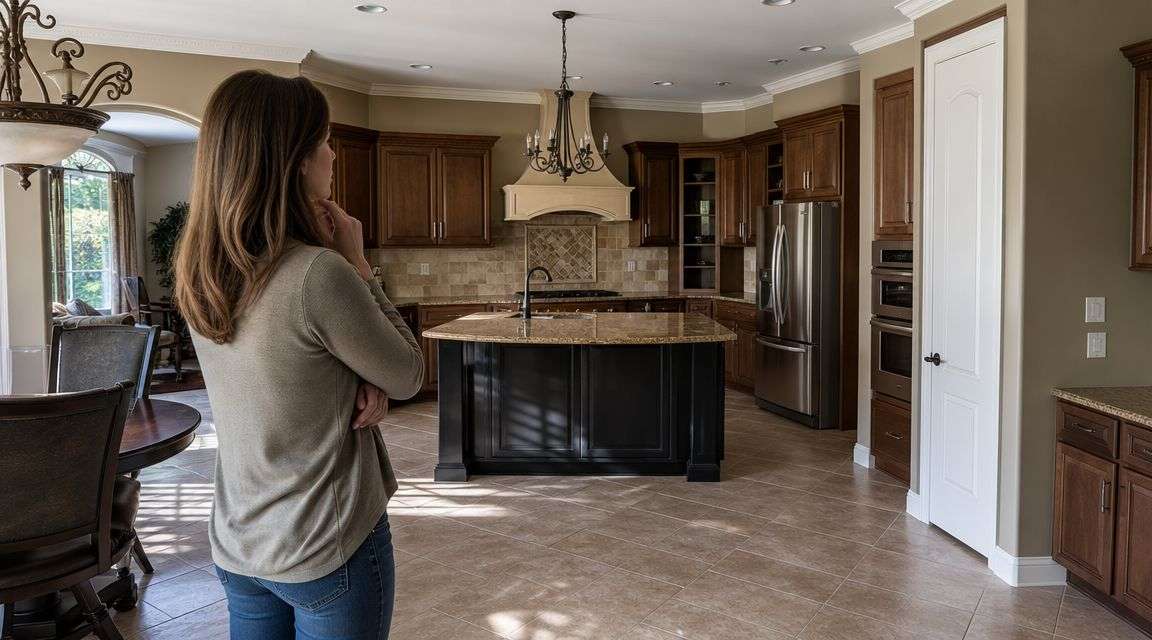
That doesn't automatically mean you need a full replacement project. In higher-value neighborhoods, homeowners often assume the only way to get a luxury look is to strip everything out and start over. In practice, that's often the most expensive path to solve what is really a finish and style problem.
National remodeling guidance points homeowners toward targeted updates and stresses that layout decisions should be finalized before committing to major big-ticket changes because those changes are expensive and disruptive, as discussed in this remodeling guidance on targeted kitchen value. That matters here. If your kitchen works, preserving the layout can be the smartest move.
What most homeowners are actually reacting to
Usually it comes down to a short list:
- The color feels dated: Honey oak, red-toned cherry, yellowed clear coats, and dark espresso finishes can make a kitchen look older than it is.
- The room feels darker than the rest of the home: Even good cabinetry can drag a space down when the finish absorbs light.
- The cabinets look worn, not broken: Scratches, faded stain, and finish failure look bad, but they don't always justify tear-out.
- The counters or backsplash were updated first: Once one surface improves, old cabinets stand out even more.
A kitchen can feel completely different without changing the footprint. That's often the difference between a smart update and an oversized project.
For homeowners looking into Dr. Phillips cabinet refinishing and repainting options, that's the essential starting point. Not “How big of a remodel can I afford?” but “What is the least disruptive way to make this kitchen match the rest of my home?”
The True Cost and Disruption of a Full Remodel
A full kitchen remodel sounds clean on paper. In reality, it's a chain reaction. Once cabinets come out, other work often follows. Floors may need patching. Plumbing and electrical lines may need adjustment. Drywall repair, countertop templating, appliance coordination, and finish scheduling all start stacking up.
That's why homeowners underestimate not just the bill, but the disruption. Even when a contractor runs a good schedule, a full remodel means trades moving in and out, materials arriving in phases, and the kitchen being partially or fully unusable for an extended stretch.
What drives the disruption
A full remodel usually pulls in several categories of work at once:
- Demolition and disposal: Old cabinets, counters, backsplash, and sometimes flooring all have to come out.
- Utility changes: If the sink, cooktop, lighting, or appliances move, plumbing and electrical changes follow.
- Trade coordination: Carpenters, electricians, plumbers, countertop installers, tile crews, and painters all work on different sequences.
- Punch list delays: One missed measurement or backordered component can hold up the next trade.
None of that means full remodeling is wrong. It means it should be reserved for kitchens that need structural or layout-level change.
Time matters more than most homeowners expect
A lot of local marketing leans on the idea of a fast kitchen remodel. However, the process is more demanding. A standard kitchen remodel typically takes 4 to 6 weeks, and a complete remodel with layout changes can run 6 to 10 weeks or more, based on the remodeling guidance summarized on this Dr. Phillips remodeling timeline reference.
That timeline matters in real life:
- Families lose a daily-use space
- Sellers lose staging momentum
- Landlords lose turn speed
- Occupied homes absorb dust, noise, and scheduling stress
Practical rule: If you don't need to move walls, move utilities, or redesign storage from scratch, don't assume a full remodel is your default option.
For many households, the better alternative isn't just “cheaper.” It's avoiding a month-plus shutdown for a kitchen that was functionally fine to begin with.
Comparing Your Kitchen Remodel Alternatives
In Dr. Phillips, the best kitchen update usually comes down to one question. Are you fixing a dysfunctional room, or are you fixing a dated look?
That distinction saves homeowners from overspending. A lot of kitchens in this area already have good square footage, usable layouts, and solid cabinet boxes. They just read older than the rest of the home. In that situation, a full remodel solves problems you may not have.
Dr. Phillips Kitchen Update Options Compared
| Update Option | Estimated Cost (Dr. Phillips) | Typical Timeline | Disruption Level | Potential ROI |
|---|---|---|---|---|
| Full major remodel | High-end projects can reach six figures, especially with layout, electrical, plumbing, and custom finish work | Often weeks, especially if layout changes are involved | High | Lower recoup than lighter updates in national resale reporting |
| Professional cabinet refinishing | Usually far lower than full replacement when boxes are sound | Often completed in days | Low to moderate | Strong value when appearance is the main issue |
| Cabinet refacing | Mid-range option when boxes stay but doors and drawer fronts change | Faster than full replacement | Moderate | Good fit when visible surfaces need replacement but boxes can stay |
| Minor kitchen refresh and cosmetic updates | Lower-cost option focused on surfaces and fixtures | Shorter than a full remodel | Lower than a gut project | Often performs well when the kitchen is functional and only looks dated |
One national ROI summary often cited in kitchen planning reports found that major upscale remodels recouped far less than lighter kitchen updates, and that partial cabinet decisions were common rather than unusual, according to this 2026 kitchen ROI report.
Interpreting the data in practice
The expensive option is not automatically the smart option. Homeowners tend to compare finished photos, but the bigger cost difference usually sits behind the walls and under the schedule. Demolition, trade coordination, utility adjustments, template delays, and punch-list corrections are what push a project into a very different budget category.
Cabinet-focused work stays attractive because it addresses what many Dr. Phillips kitchens need. Updated color. Cleaner lines. A finish that matches the level of the rest of the home. If the cabinet boxes are solid and the layout already works, replacing everything often adds cost without adding equivalent function.
For homeowners deciding between keeping cabinet boxes and changing the exterior treatment, this guide on refinishing versus refacing cabinets helps separate two options that get confused all the time.
If your cabinets are structurally sound and you like the layout, using full-remodel money to solve a finish problem is usually a poor return.
In practice, partial improvement is a standard remodeling choice, not a fallback plan. That matters in Dr. Phillips, where many homeowners want a cleaner, more current kitchen without turning the house into a jobsite for a month or more.
The Power of Professional Cabinet Refinishing
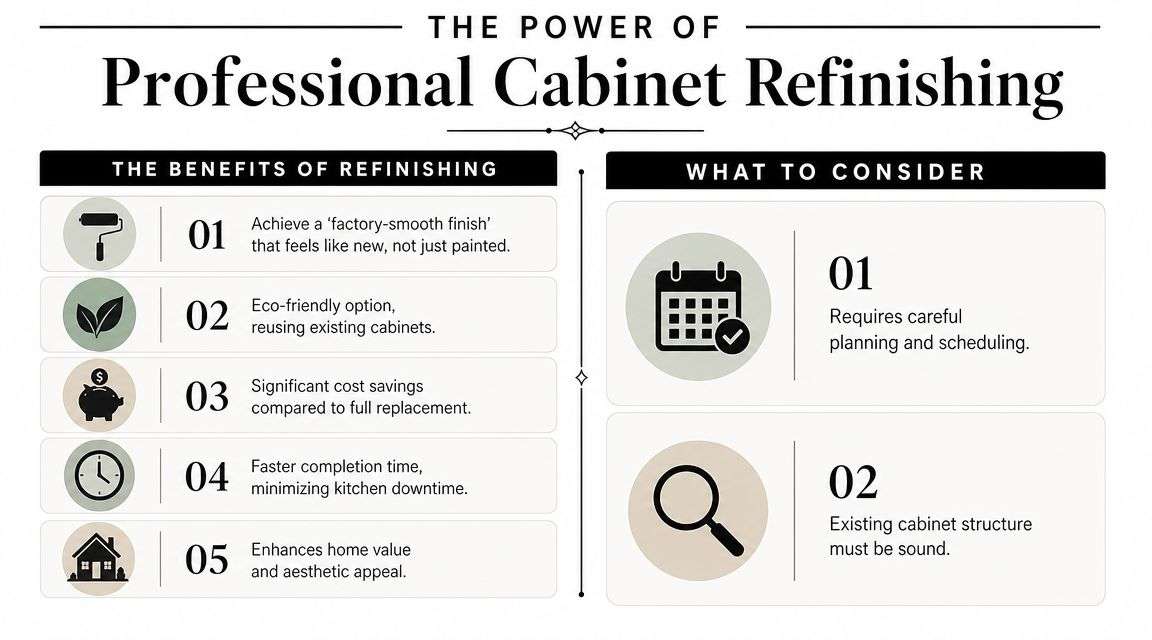
In Dr. Phillips, a lot of kitchens do not need a new footprint. They need a better finish, cleaner style, and a result that matches the rest of the house without pushing the project into full-remodel cost.
That is where professional cabinet refinishing usually makes the most financial sense. If the cabinet boxes are solid and the layout already works for daily use, refinishing changes the part of the kitchen people see every day. You avoid demolition, reduce disruption, and put more of the budget into visible improvement instead of tear-out and rebuild.
When refinishing works best
Refinishing is a strong fit when the cabinets are built well, the doors and drawer fronts are still worth keeping, and the room does not need a layout change. In those cases, it gives homeowners the high-end visual reset they want without paying replacement pricing for cabinet boxes that are still doing their job.
It is usually the right path when:
- The cabinet boxes are structurally sound
- The layout already functions well
- The homeowner wants a major cosmetic change
- The project doesn't require footprint changes
If the boxes are swollen from water, pulling apart at joints, or built from low-grade materials that are already failing, refinishing is the wrong fix. A finish upgrade cannot correct structural problems. But in many Dr. Phillips homes, especially where the kitchen already has good square footage and a workable plan, the cabinets themselves are often worth saving.
What separates professional refinishing from paint-on-site jobs
Cabinet refinishing is only as good as the prep and application behind it. Homeowners usually notice the difference at the edges first. Then around profiles, hinge areas, inside corners, and sheen consistency under kitchen lighting.
A professional process typically includes:
- Removing doors and drawer fronts so they can be finished correctly instead of worked around on the cabinet frame.
- Thorough cleaning and prep to remove grease, contamination, and failing material that would cause adhesion problems later.
- Minor repairs for chips, dents, and surface wear that would still show through a new coating.
- Spray-applied finishes and protective topcoats for a smoother, more furniture-grade result.
- Careful reinstallation and adjustment so doors hang properly and the kitchen functions as well as it looks.
The trade-off is straightforward. Professional refinishing costs more than a quick painter-grade cabinet repaint, but it usually holds up better and looks more consistent over time. Homeowners aiming for a polished, updated kitchen tend to care less about the lowest starting price and more about whether the finish still looks clean a year later.
Finish selection matters too. Painted cabinets can brighten a darker kitchen and sharpen the overall style. Updated stain work can tone down dated orange or red wood without stripping out all of the character. New hardware often completes the change for a modest added cost.
For homeowners comparing options, this overview of the cabinet refinishing process and what it includes gives a clear picture of how the work is handled. In some kitchens, replacing a few damaged components and refinishing the rest is the most efficient mix of cost, appearance, and durability.
When the kitchen is a good candidate, the return is practical. Keep the structure that still works. Upgrade the finish people notice. Avoid paying full-remodel money for a problem that does not require full replacement.
Understanding Other Update Options
Not every kitchen should be refinished. Some should be refaced. Some need partial replacement. Some need a more serious redesign. The key is matching the method to the actual problem instead of forcing every kitchen into the same answer.
When refacing makes sense
Refacing keeps the cabinet boxes but changes the visible skin of the kitchen. Doors and drawer fronts are replaced, and exposed cabinet surfaces are covered to match. It can be a practical middle ground when the layout works but the doors are too damaged, too mismatched, or too outdated to justify refinishing alone.
It's also a valid option for homeowners who want a different door style, not just a different color. That said, it adds more material cost than refinishing and still depends on the existing cabinet boxes being worth keeping.
Where modular systems fit
Modular cabinet systems fit a different situation. They make the most sense when the layout itself needs to change and the homeowner wants standardized cabinet sizing, adjustable interiors, and a more budget-conscious path than custom cabinetry.
The tradeoff is technical. Modular systems depend on precise leveling, filler strips, and accurate scribing. In older homes or rooms with walls that aren't perfectly plumb, those fit issues become more obvious. That's why the guidance summarized in this modular cabinet planning reference points to modular systems as a better fit for layout changes, while refinishing is better for improving an existing, sound cabinet layout.
The reality of DIY cabinet painting
DIY cabinet painting looks simple until the work starts. Homeowners usually run into the same problems:
- Prep gets underestimated: Grease, old finish, and daily kitchen residue interfere with adhesion.
- The finish looks uneven: Brush marks, roller texture, edge buildup, and inconsistent sheen are common.
- Reassembly gets sloppy: Misaligned doors and paint bridging around hinges can make the whole kitchen feel off.
- The time load expands fast: Even a smaller kitchen can take over the home while parts are drying, curing, and waiting to be reinstalled.
DIY can be reasonable for a utility space, a laundry room, or a temporary fix. For a main kitchen in a Dr. Phillips home, it often doesn't deliver the level of finish homeowners expect once the room is back in full daylight.
How to Choose the Right Path for Your Kitchen
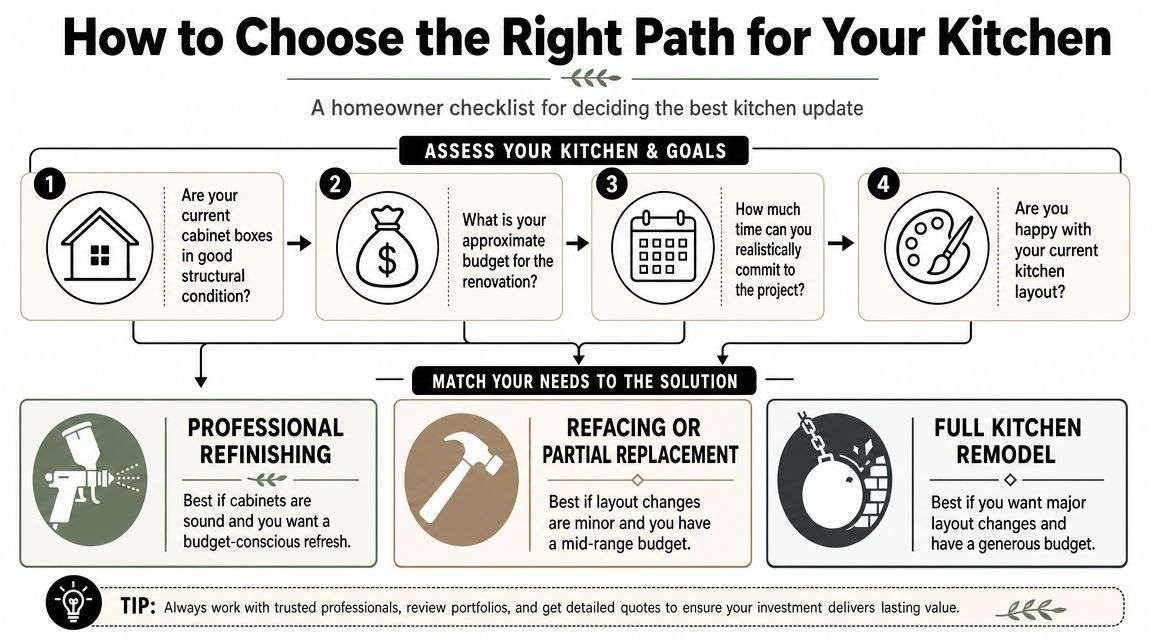
The easiest way to choose among Dr. Phillips kitchen remodel alternatives is to stop thinking about categories and start with your own kitchen. Not every dated kitchen needs the same answer.
Start with these questions
Ask these first:
- Do you like your current layout? If yes, that pushes you away from a full remodel and toward refinishing, refacing, or selective updates.
- Are the cabinet boxes solid? Sound structure is the dividing line between preserving and replacing.
- Is the main complaint visual or functional? If the pain point is color, wear, sheen, or style mismatch, a cabinet-focused solution usually fits better.
- How long can you realistically live without normal kitchen use? Tolerance for downtime matters more than is often underestimated.
A kitchen that looks old and a kitchen that works badly are not the same problem.
Simple decision guide
If the layout works and the cabinet structure is good, professional refinishing is usually the cleanest path to a major visual upgrade.
If the boxes are sound but the doors need to be changed for style or condition reasons, refacing may be the better fit.
If you need pantry reconfiguration, appliance relocation, or a full new flow, that points toward modular or replacement cabinetry and a larger remodel plan.
If your cabinets are acceptable but other finishes are dragging the room down, minor cosmetic updates such as counters, backsplash, lighting, and hardware may be enough.
A practical final filter is this: choose the lightest intervention that fully solves the problem. Homeowners often jump too quickly to replacement when preservation would have produced the same visual result with less cost and less disruption.
Frequently Asked Questions About Kitchen Updates
Can dark cabinets really be updated to a light modern finish
Yes, if the cabinets are structurally sound and prepared correctly. The quality of the result depends on surface prep, coating system, and application method. Dark stained cabinets can be transformed, but the process has to control tannin bleed, old finish contamination, and profile buildup.
Is refinishing durable enough for a busy family kitchen
It can be, when the work uses proper prep and durable cabinet-grade finishing systems. The weak point in most failed cabinet paint jobs isn't the idea of refinishing itself. It's poor prep, rushed coating, or the wrong material for a high-touch kitchen environment.
What if some parts of the kitchen need more than refinishing
That's common. A kitchen doesn't have to be all one strategy. Homeowners sometimes keep the main cabinet boxes, refinish the visible cabinetry, replace worn hardware, and update counters or backsplash separately. A mixed approach often solves the problem better than one oversized project.
Does a lighter-touch update still help in an upscale market
Yes, if the kitchen looks current, clean, and cohesive when the work is done. Buyers and homeowners respond to finish quality, light, and visual consistency. In many upscale homes, a kitchen feels expensive because it's well edited, not because every cabinet box was replaced.
If your Dr. Phillips kitchen feels dated but the layout still works, it's worth looking at preservation before demolition. Resurrect Wood Refinishing helps Central Florida homeowners update cabinets, wood finishes, and built-ins with a factory-smooth result that avoids the cost and disruption of a full tear-out. If you want a practical opinion on whether your kitchen should be refinished, refaced, partially updated, or fully remodeled, reach out for a quote and a straightforward assessment.
