
Your kitchen can start to feel tired before the rest of the house does. In Orlando, that usually shows up as faded doors, small chips near the handles, and a finish that looks dull after years of heat, humidity, and daily cooking. If the cabinet boxes are still solid, painting or refinishing can give the room a clean reset without the upheaval of a full replacement.
Table of Contents
- Introduction to Orlando Cabinet Painting
- Benefits of Painting vs Full Replacement
- Professional Painting Process and Timeline
- Finish Options and Durability
- Local Pricing Ranges and Cost Factors
- How to Choose a Cabinet Painter in Orlando
- Maintenance Tips for Painted Cabinets
- Frequently Asked Questions
Introduction to Orlando Cabinet Painting
A lot of Orlando homeowners reach the same crossroads. The kitchen still works, but the color feels dated, the sheen is uneven, and the room doesn't match the way the rest of the home has evolved. That's where Kitchen Cabinet Painting Orlando becomes less about decoration and more about smart surface renewal.
Why surface renewal makes sense
Cabinet painting keeps the existing structure and updates only what you see and touch every day. That matters in a market where full cabinet installation commonly ranges from $4,000 to $90,000 in 2026 depending on stock, semi-custom, or custom choices, while cabinet and vanity manufacturing remains a major industry at $22.1 billion with 5,833 businesses operating in 2026 (Orlando cabinet installation market context). In plain terms, many homeowners are not asking whether they want a prettier kitchen, they're asking how to get one without blowing up the whole budget.
Orlando's climate also pushes people toward options that reduce disruption. If your cabinets are structurally sound, repainting can refresh the room while avoiding the mess of demolition, delivery delays, and the domino effect that comes with swapping every box and door. For households that cook daily, share space with kids, or rent to short-term or long-term occupants, that lower disruption often matters as much as cost.
Practical rule: If the layout works and the cabinet faces are still stable, start with painting before assuming replacement is the only path.
The question isn't whether paint can make cabinets look new. It's whether the finish system, prep work, and room conditions are good enough to make that new look last in an Orlando kitchen.
Benefits of Painting vs Full Replacement
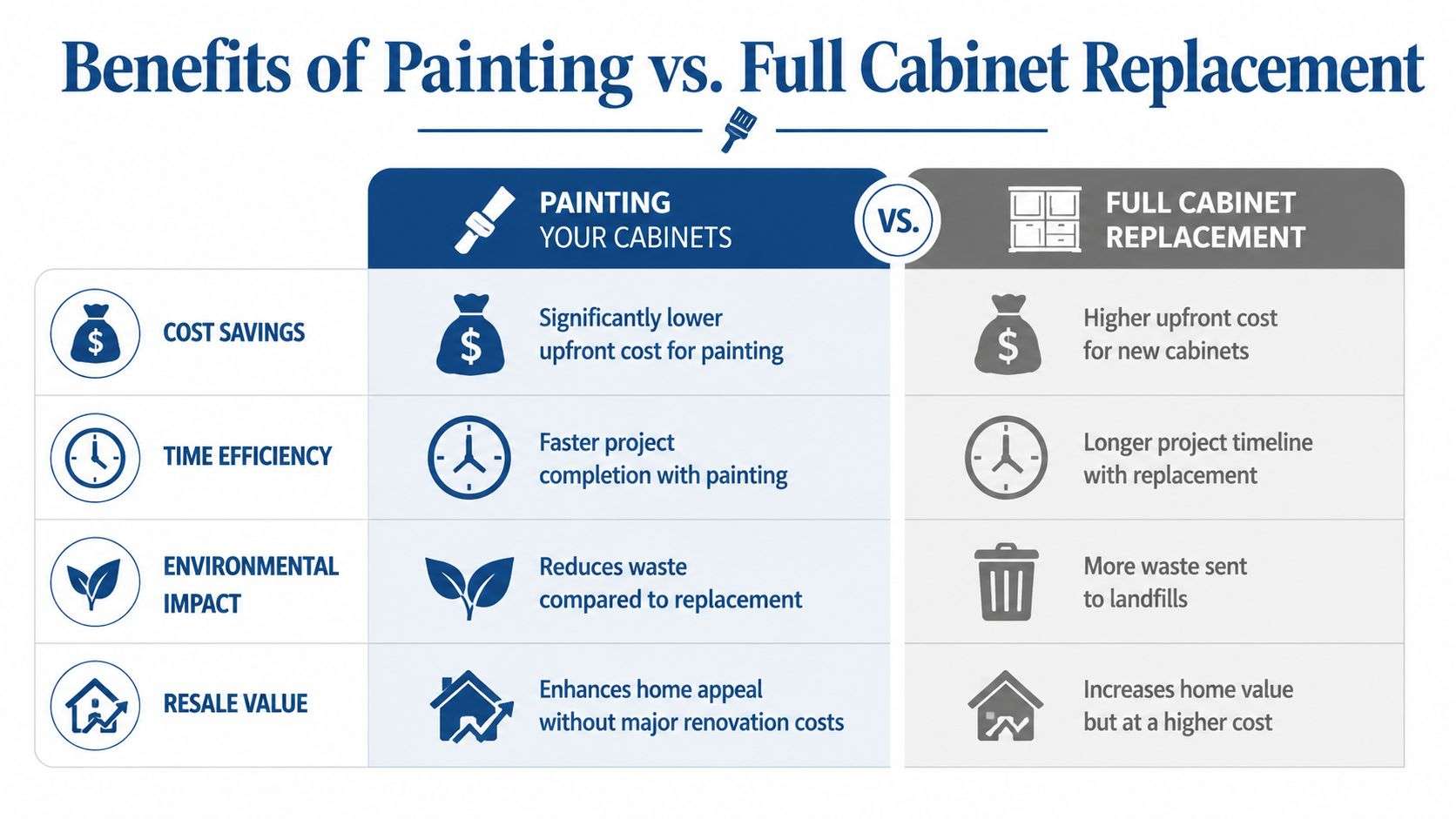
A kitchen can look dated for reasons that have nothing to do with the cabinet boxes themselves. In that situation, painting works like a fresh coat on a solid wall, it changes the room you see every day without forcing you to rebuild what is already holding up well. For Orlando homeowners, that matters because replacement can push the project into a much more disruptive and expensive lane, while painting keeps the focus on the visual impact.
The money side also points in the same direction. The 2026 Kitchen ROI report shows that a minor kitchen remodel in the $28,000 to $30,000 range returns 112.9% ROI nationally, while major remodels in the $82,000 to $164,000 range return only 36% to 51% at resale (2026 Kitchen ROI report). Painting is not the same as a full remodel, but the lesson carries over. Homeowners often get better results by improving the visible surfaces instead of paying to replace every part of the kitchen at once. For a closer look at the cost side, see this guide on cabinet refinishing versus replacement.
Where painting fits best
Painting makes the most sense when the cabinet structure is still sound and the problem is appearance, not function. That includes kitchens that feel too dark, have an outdated color, or need a cleaner finish before a sale, a rental turnover, or a general refresh. It also fits a market where cabinet resurfacing remains heavily residential, with 78% of revenue coming from residential applications and kitchen cabinets as the largest subsegment (Kitchen ROI report).
The choice becomes clearer if you separate structure from presentation. Replacement gives you new boxes, new doors, and a new layout if needed. Painting keeps the working parts in place and changes the look, much like changing the outer shell of a room without moving the walls. If the doors close properly, the boxes are stable, and the layout already works for your household, painting usually gives the better return for the amount of disruption involved.
Orlando's humidity also changes the decision. A cabinet system that is already swollen, warped, or failing at the joints usually needs more than a new finish, because paint cannot correct movement in the wood or broken hardware. If the cabinets are sound but the finish looks tired, painting is often the more practical choice for occupied homes that need to stay usable while the project is underway. That timeline difference matters for families cooking daily, sharing one kitchen, or trying to avoid the dust and downtime that come with a full tear-out.
A painted cabinet job cannot fix warped boxes or broken hinges, but it can make a sound kitchen look like it belongs in the next decade.
The simplest framework is this. If the issue is cosmetic, painting is usually the lighter and smarter move. If the issue is structural, replacement is the better path. Orlando homeowners who are deciding between the two can start with that split and then factor in humidity, daily use, and how long the kitchen needs to stay live during the work.
Professional Painting Process and Timeline
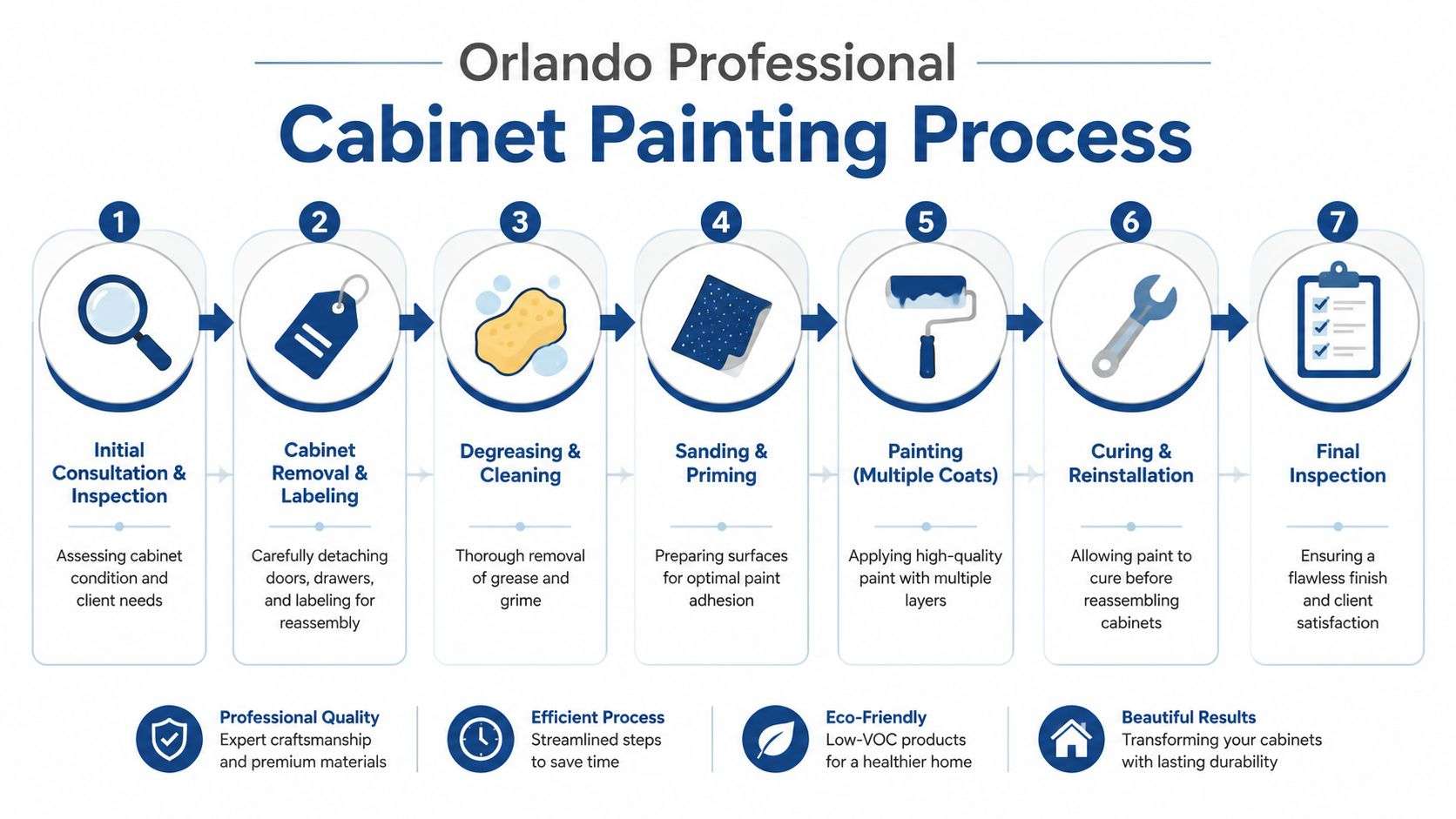
Professional cabinet painting looks slow because the front end is doing the heavy lifting. The job usually spans 3 to 7 days, and prep accounts for about 70% of the labor because the doors, drawers, and hardware need to come off, get labeled, degreased, sanded, filled, primed, and cured before reassembly (professional cabinet painting process). That's not delay, that's the part that keeps the finish from failing later.
What the workflow actually looks like
The process starts with inspection and masking. A painter checks the cabinet condition, notes repairs, and protects floors, counters, and nearby surfaces so dust and overspray stay contained. After that comes removal and labeling, which sounds basic but saves a lot of confusion when everything has to go back in the same place.
Then the essential prep begins. Grease gets removed, old residue gets broken down, and every surface is sanded and filled so the new coating can bond properly. If that step is rushed, adhesion suffers, and the finish is more likely to chip at edges, especially around handles, sink bases, and drawers that get touched all day.
After prep, thin coats go on, then the cabinets cure before reinstallation. That cure time matters in occupied homes because touching the doors too early can leave marks, blocking, or edge damage. If you're coordinating countertop work or hardware upgrades, this is the moment to line those pieces up with the paint schedule rather than treating them like separate projects.
Occupancy tip: Plan meals around the project window before the first door comes off, not after the kitchen is already half-packed.
For homeowners who want faster coordination, a same-week schedule may fit the project better than a staggered one, especially if you're working around guests, tenants, or a listing timeline. Same-week kitchen cabinet updates can help frame that planning choice.
The big lesson is that a good cabinet finish isn't built by speed. It's built by discipline, sequence, and drying time.
Finish Options and Durability
A cabinet finish has to fit the way a kitchen is used. In Orlando, humidity adds another layer to that decision, because moisture, steam, cooking heat, and frequent wipe-downs all test the coating over time. The finish is doing more than adding color, it is the surface that has to hold up when doors, drawer fronts, and frames get handled every day.
How the coating stack works
Professional cabinet systems usually build the finish in layers, starting with cleaning and degreasing, then primer, then topcoats, with sanding between coats to keep the surface smooth and reduce dust nibs and grain raise (custom painted cabinets). That layered approach helps the coating bond evenly across doors, drawer fronts, and frames instead of sitting on top like a thin skin.
The topcoat choice changes how the cabinet will behave in daily use. Water-based alkyds are often selected because they balance appearance and usability, while lacquers can create a smoother, more refined look. Catalyzed conversion varnish is often treated as the durability benchmark because its cross-linked chemistry gives it greater hardness and better chemical resistance in kitchens that see moisture, heat, and detergent contact (custom painted cabinets). For homeowners comparing finish paths, the key question is not only which sample looks best, but which coating matches the room's demands.
A softer coating can be easier to work with during application, but it may be less forgiving later if the kitchen gets heavy use. A harder coating usually holds up better, yet it also depends more on careful prep and full curing before the cabinets go back into service.
Resurrect Wood Refinishing uses cabinet refinishing and finish systems that are designed to give a painted or stained kitchen a more durable surface, which makes it one option for homeowners comparing coating paths in Central Florida.
Rule of thumb: In a busy kitchen, decide on durability first, then look at sheen.
Orlando homeowners often have to choose a finish based on how the kitchen will live after the project, not just how it will look on the first day. A home with frequent cooking, lots of wiping, or a rental or occupied listing may benefit from a coating designed for longer wear. Polyurethane acrylic cabinet finish is one finish path homeowners may compare when deciding how much durability they need.
Local Pricing Ranges and Cost Factors
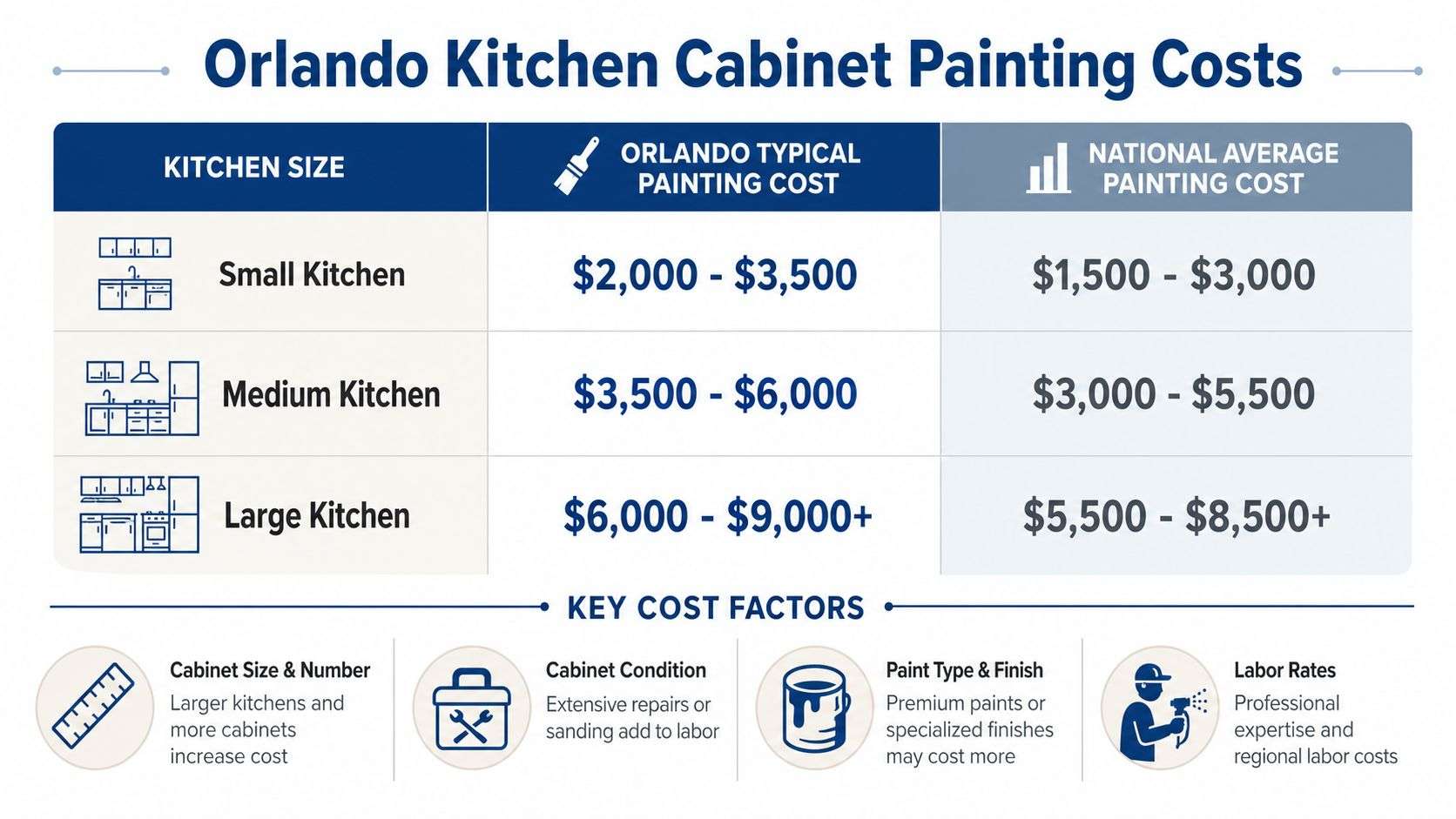
For Orlando homeowners, cabinet painting usually stays in a much narrower cost band than full replacement, which makes it a practical budgeting choice. The difference is easy to understand: painting preserves the cabinet boxes you already have, while replacement adds demolition, new materials, and more labor. For the local price spread, cabinet painting often falls around $1,200 to $7,000, while full replacement can range from $4,000 to $90,000, depending on cabinet type and project scope. That gap is why many homeowners start with refinishing before they commit to a larger remodel.
What drives the quote
| Service Option | Price Range |
|---|---|
| Cabinet Painting in Orlando | $1,200 to $7,000 |
| Full Cabinet Replacement in Orlando | $4,000 to $90,000 |
Several factors shape the quote. Cabinet count is one of the biggest. More doors and drawers mean more removal, labeling, sanding, masking, and reinstalling, so the labor rises with the size of the kitchen. Surface condition matters too. Heavy grease buildup, chipped edges, or previous coating problems add prep and repair time before paint can go on.
The coating system also affects the total. Some finishes need tighter material control, more careful application, or longer cure time, and those steps add labor. In a humid place like Orlando, that extra care is not just a detail. It affects how well the finish sets, how soon the kitchen can be used again, and how much risk there is of early wear if the cabinets are put back into service too quickly.
Orlando homeowners often get the most value by controlling scope. Keep the existing layout, preserve sound cabinet boxes, and focus spending on visible surfaces rather than demolition. That approach works especially well when the kitchen still functions well but looks tired, since painting refreshes the room without paying for a full tear-out.
This also explains why cabinet painting fits resale prep, rental turnover, and design updates. It gives the room a cleaner look without the added disruption of replacement logistics. In an occupied home, that matters. A shorter, cleaner project timeline can be easier to live with than a full remodel, even if the paint job itself still requires patience while it cures.
Budgeting insight: A lower upfront bid is only helpful if the prep, coating, and cure schedule are strong enough to protect the finish.
If you are comparing estimates, look past the total at the bottom. Ask what the quote includes, how the surfaces are prepared, and how long the kitchen stays out of service before you decide whether two bids are comparable.
How to Choose a Cabinet Painter in Orlando
A kitchen can look ready for paint on the surface and still be a poor candidate underneath. Grease at the hinges, soft spots at the sink base, or rushed prep around the doors can all show up later as peeling, uneven sheen, or edges that wear too fast. In Orlando, the choice gets even more specific because humidity affects how coatings dry, how long cure time should be respected, and how soon an occupied home can safely return to normal use.
The easiest way to sort painters is to treat the estimate like a map of the work. A clear contractor should show you where the cabinets are cleaned, where repairs happen, what coating system is being used, and how the project is sequenced from removal to rehang. If that plan is fuzzy, the finish probably will be too.
Questions worth asking
- Surface prep: Ask how they clean grease, sand edges, and handle repairs before paint ever touches the cabinet.
- Coating selection: Ask which finish they'd use for your cabinet condition and why that choice fits your home's use pattern.
- Dust control: Ask how they protect counters, floors, and adjacent rooms during removal and spraying.
- Timeline clarity: Ask how long the kitchen will be out of service and what has to happen before reinstallation.
- Warranty terms: Ask what kinds of wear or adhesion issues are covered after completion.
The answers should help you compare more than color names. Water-based alkyds, lacquers, and conversion varnish all behave differently, and the right choice depends on odor tolerance, drying speed, and how much interruption your household can handle. A finish that is easier to live with during the project is not always the finish that gives the longest service life in a busy kitchen. For timeline guidance, the useful question is not just how long the painter needs, but how the schedule fits the way your family uses the kitchen.
What a reliable answer sounds like
A strong contractor answer should be concrete. They should explain how they handle adhesion, what they do when cabinets need filling or repair, and how they account for humidity while the coating cures. If the conversation stays on color samples and skips the process, keep looking.
A good test is simple. Ask what happens on day one, what happens after the parts are prepped and coated, and what needs to be true before the doors go back up. A painter who can answer that sequence clearly usually understands cabinet work from the inside out. A painter who cannot may be selling appearance without planning for durability.
The best bid is the one that tells you what is included, what is not, and how the finish will hold up after the kitchen goes back into daily use.
Maintenance Tips for Painted Cabinets
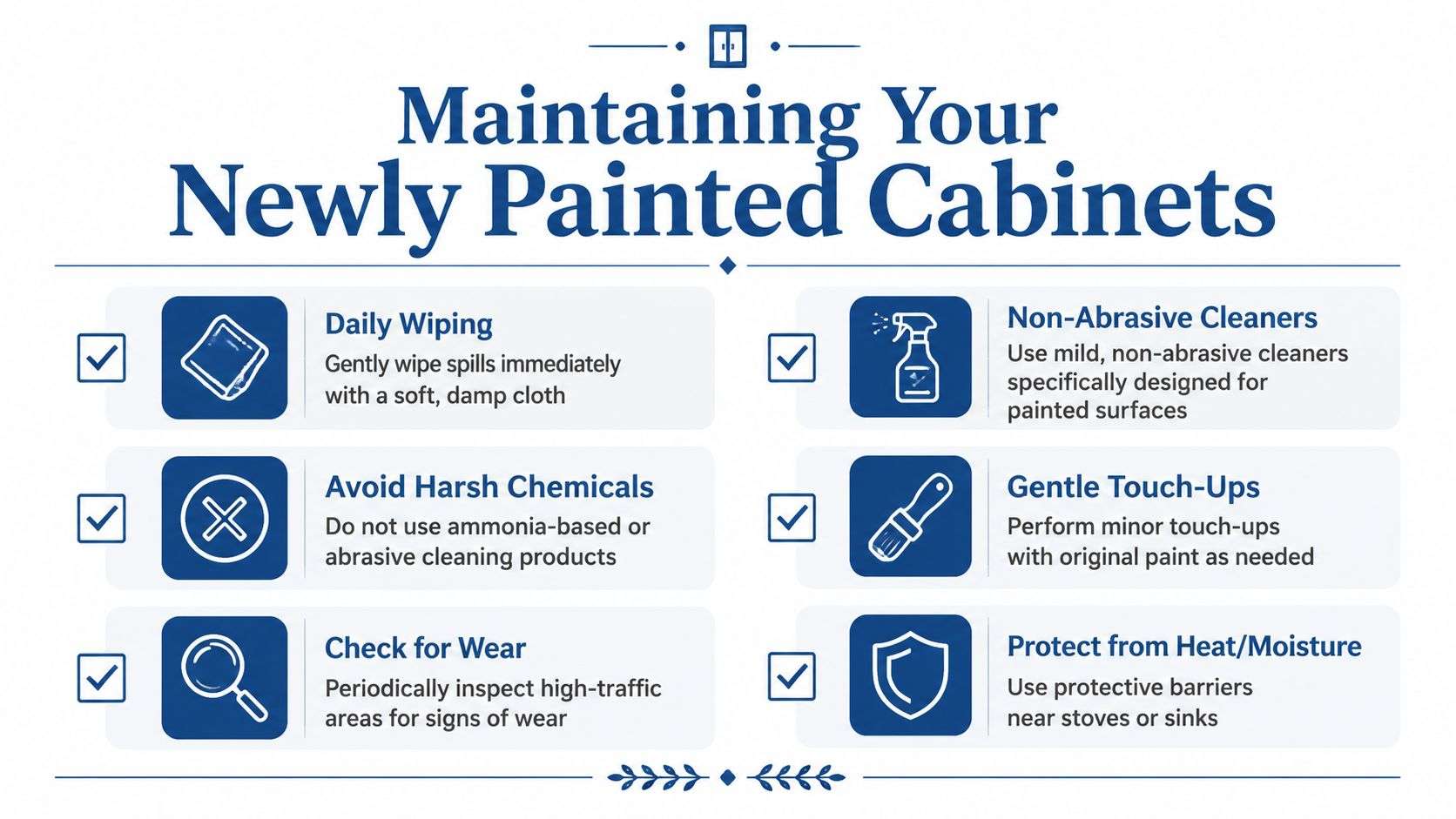
Painted cabinets last longer when you treat them like a finished surface, not a hard workbench. The habits are simple. Keep water off the edges, avoid abrasive cleaners, and deal with spills right away before they sit in seams or around hardware.
Daily and seasonal care
- Daily wiping: Use a soft, damp cloth to remove splashes before they dry.
- Mild cleaners only: Choose cleaners made for painted surfaces, not heavy-duty scrubs.
- Skip harsh chemicals: Avoid ammonia-based or abrasive products that can dull the finish.
- Touch up early: Fix small chips before they spread along edges.
- Inspect high-traffic spots: Check around sinks, pulls, and lower doors where wear shows first.
- Guard against heat and moisture: Use simple barriers near stoves or sinks when splatter is common.
That's the same logic as waxing a car. The surface looks good because the owner protects it between deep cleanings, not because the finish never gets touched. Painted cabinets need the same kind of light, steady care.
If you notice wear near handles or a softening edge near a sink, handle it quickly. Small issues are easier to manage when they're still small, and keeping moisture off the finish is especially important in a humid kitchen.
Frequently Asked Questions
Can I stay in my home while the cabinets are painted? Usually, yes, but the kitchen may be partly or fully out of service during removal, spraying, and curing. In an Orlando home, that trade-off matters because humidity can slow drying and extend the time you need to work around the project. Plan cooking, storage, and cleanup before work starts so you are not improvising mid-project.
How soon can hardware and appliances go back? That depends on the coating and cure schedule. Hardware often returns after reinstallation, but appliances, doors, and drawers should wait until the finish is ready for handling without marking. A cabinet finish is a bit like fresh drywall compound, it may look ready before it is ready to take pressure, so rushing the reassembly can leave fingerprints or scuffs.
What warranty expectations are realistic? A useful warranty should focus on adhesion, peeling, and workmanship, not normal wear from daily use. Ask exactly what conditions are covered so you know whether the promise matches the finish system being installed. In a humid kitchen, that question matters even more, because moisture exposure and daily handling are part of the environment the finish has to survive.
How can I get a quote for my Orlando kitchen? Start with a conversation about your cabinet condition, your timeline, and how long you can live with limited kitchen access. That gives Resurrect Wood Refinishing the basics needed to discuss the right painting approach for your home and the finish you need.
